Thursday, 1 July 2010

Homeopathy References

The reason, of course, that the homeopathy strip has upset so many people, is that when writing negatively about such a subject, you are inevitably tramping on people's deeply held beliefs. Such criticism can seem like a personal attack. I don't think for a minute that a comic strip on homeopathy is going to change the mind's of people who are really invested in it. That's not going to happen. Only some event in their own experience will do that (maybe). The strip is primarily aimed at readers who only have a vague knowledge of the subject, and think perhaps that there must be something to the practice, as why otherwise would the British National Health service divert funds to it, and why would so many celebrities, politicians, journalists, members of the royal family, etc, believe in it?

The strip has done extraordinarily well, having had over 30 thousand views in the first two days. By far the single most successful strip I've ever had online.

Thanks to all the many people who took the time to email me and leave me notes. Far too many for me to ever get back to. A special thanks to those who have sent me links.

My next science strip will be on the subject of the supposed Moon Hoax.

References for the homeopathy strip.

Wikipedia entry on Homeopathy

What is Homeopathy. The Society Of Homeopaths.

Homeopathy: What's The Harm by Simon Singh.

Homeopaths 'endangering lives' by offering malaria remedies, Alok Jha, science correspondent, The Guardian, Friday 14 July 2006

The Lancet – “Benefits and risks of homoeopathy by Ben Goldacre.

Death By Homeopathy. Steven Novella, Neurologica Blog.

Homeopathy pdf, Sense About Science.

Statement on homeopathic remedies for malaria, Health Protection Agency.

Learn From This Tragedy, Andrew Bolt of the
 Herald Sun on the death of Penelope Dingle.

Coroner questions why Dr Peter Dingle didn't confront homeopath, Chris Robinson From: PerthNow

Monday, 28 June 2010

Homeopathy

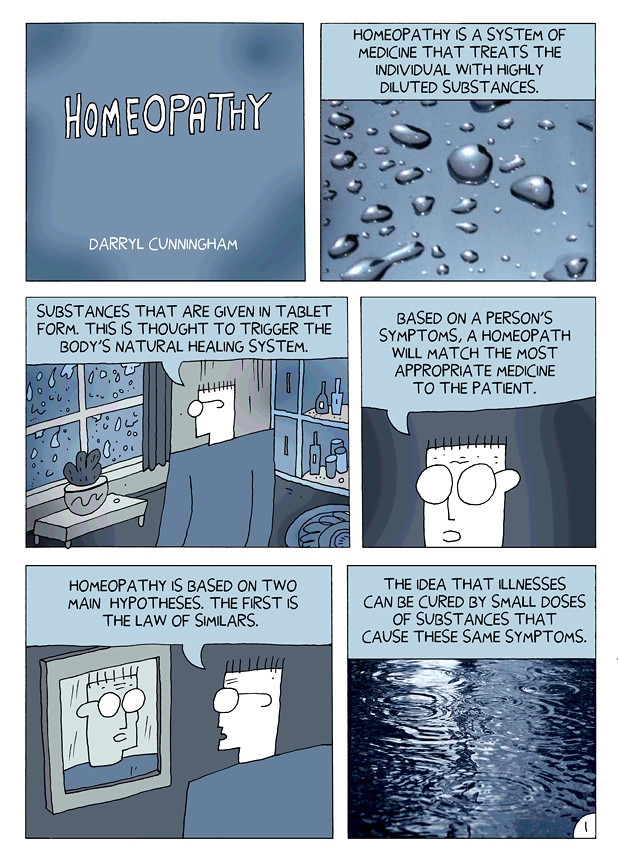
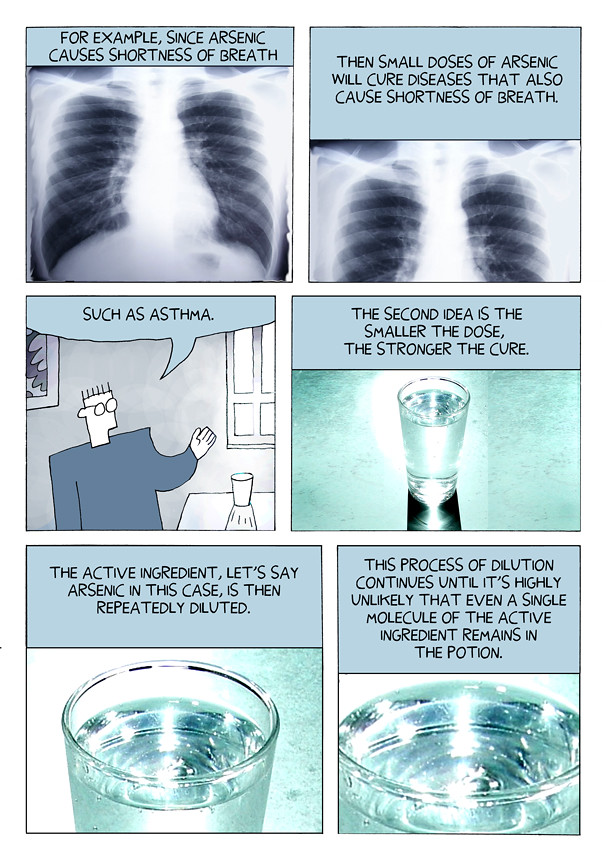
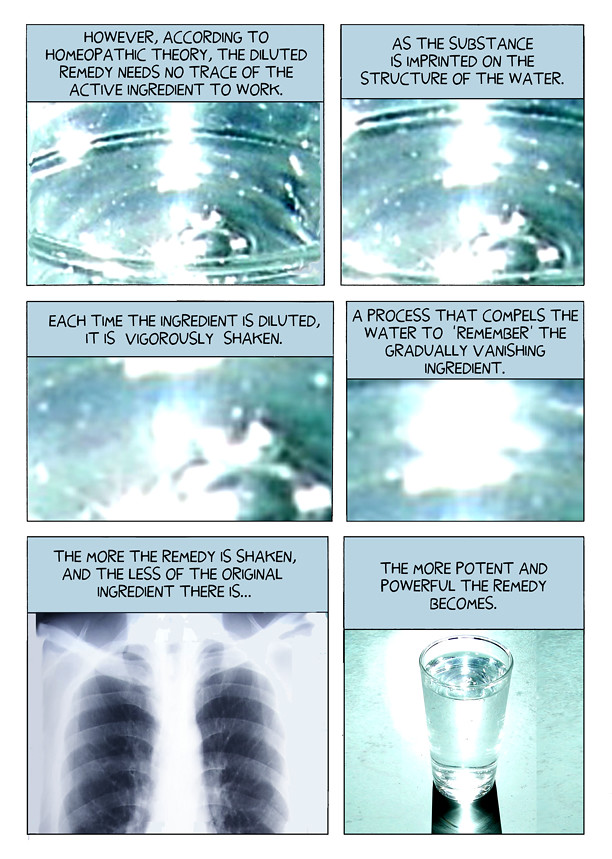
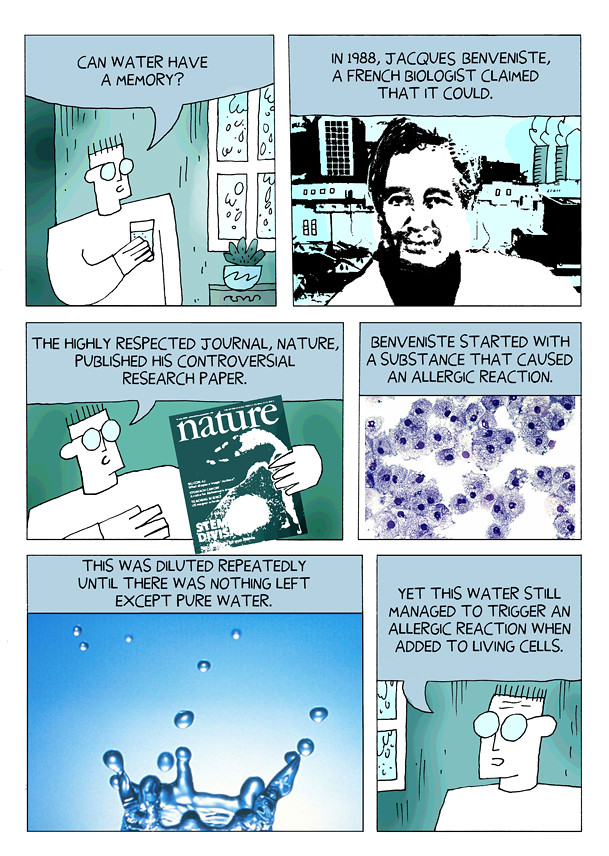
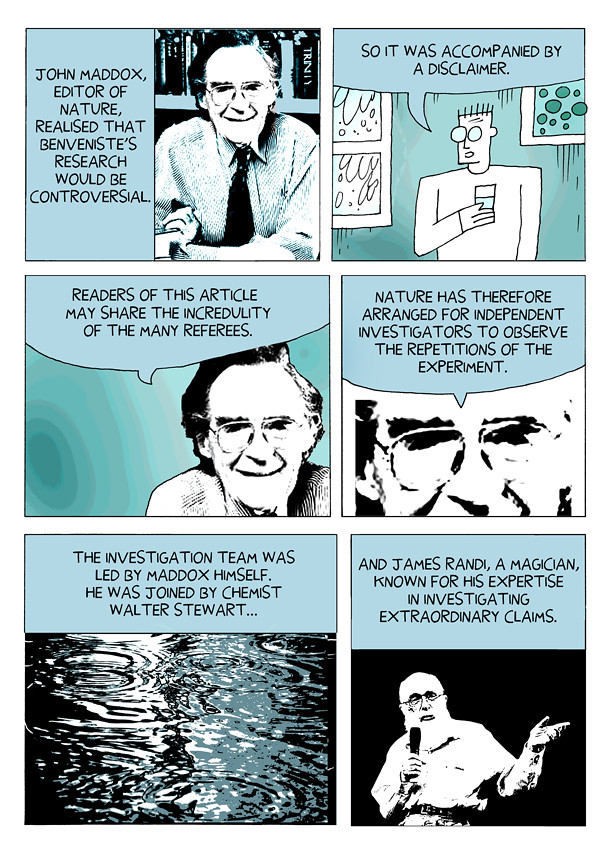
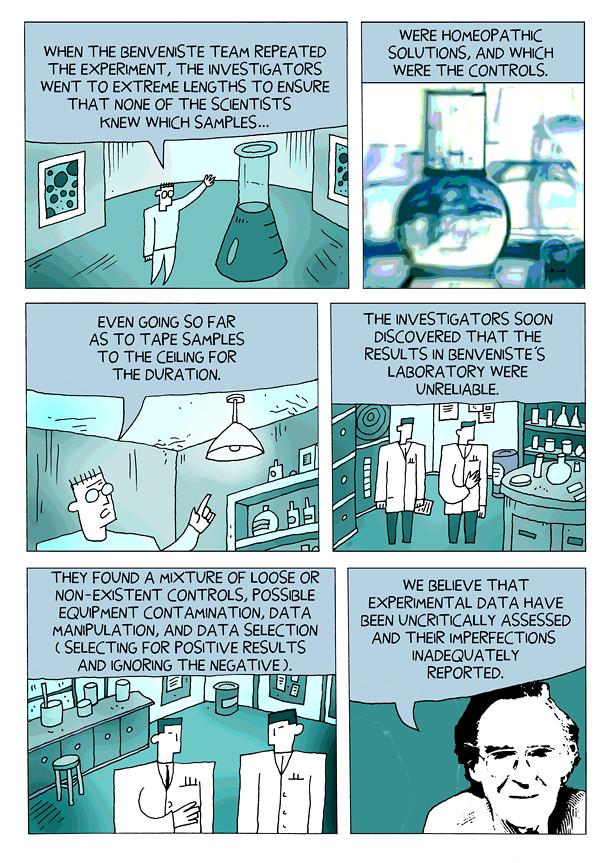
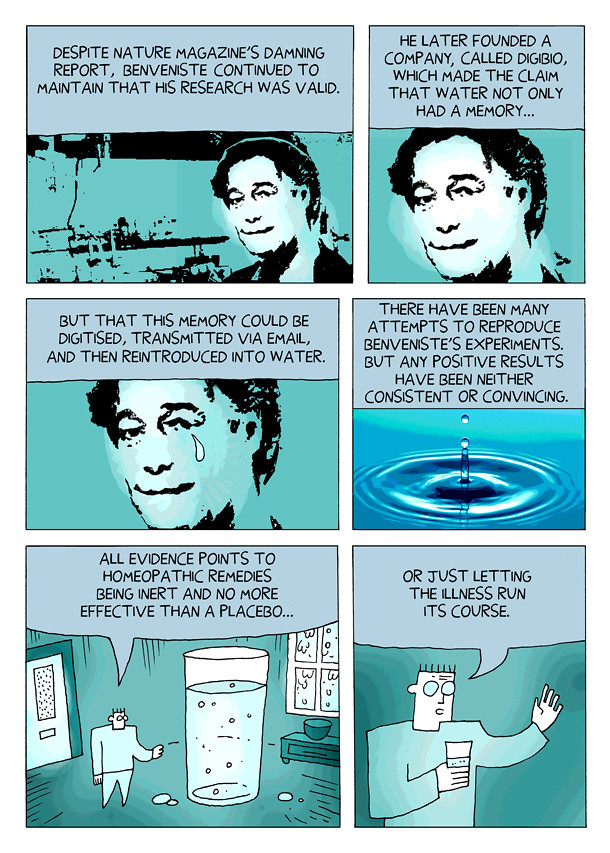
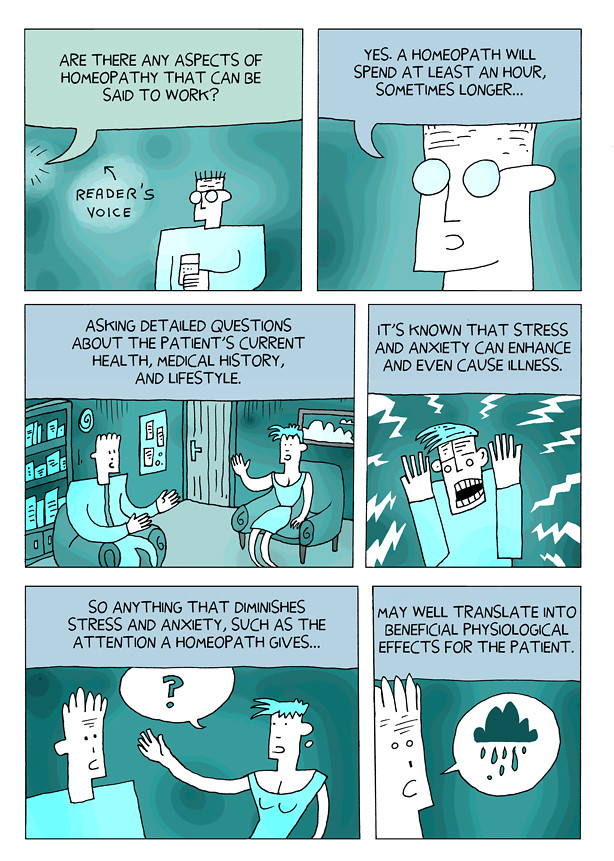
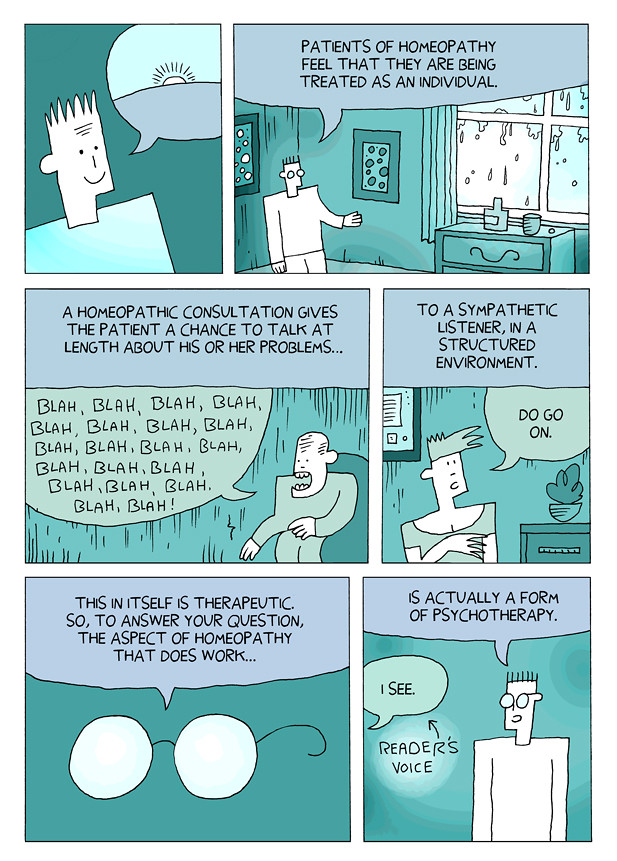
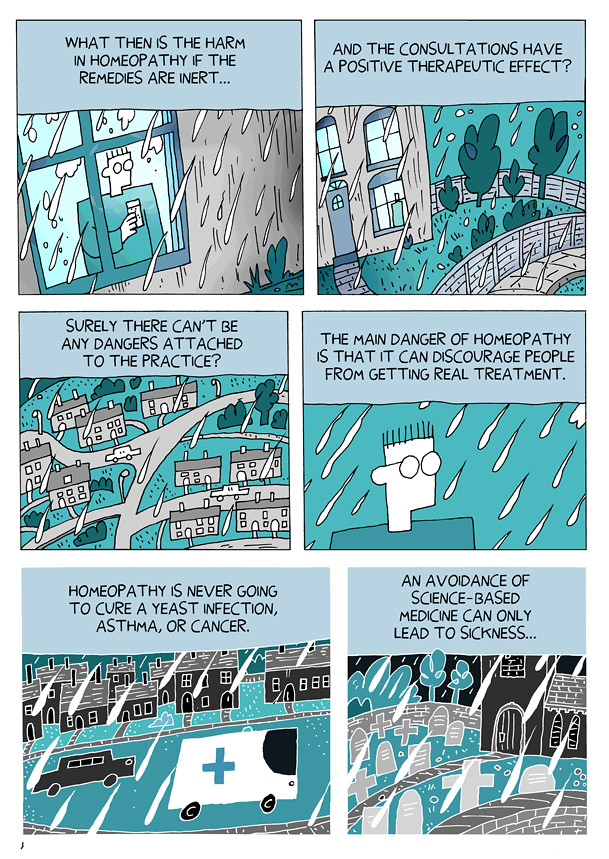
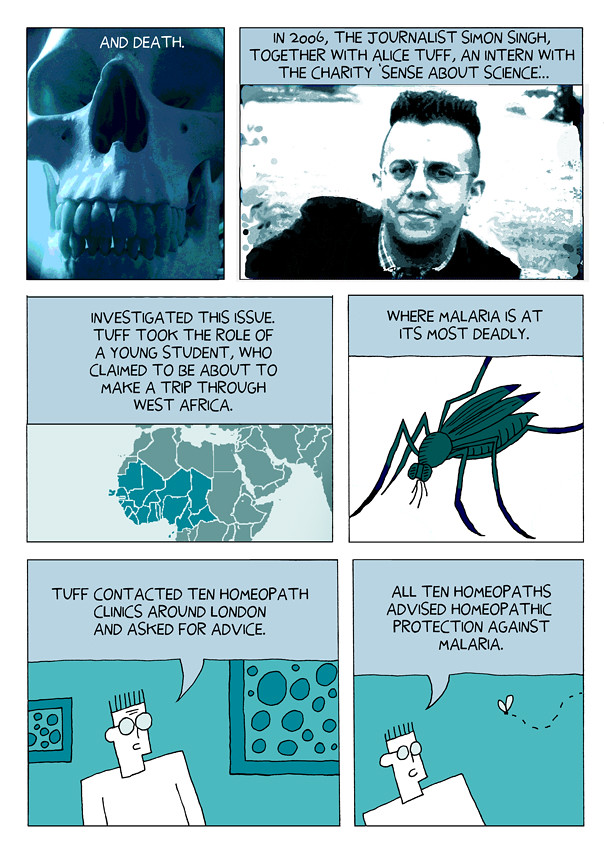
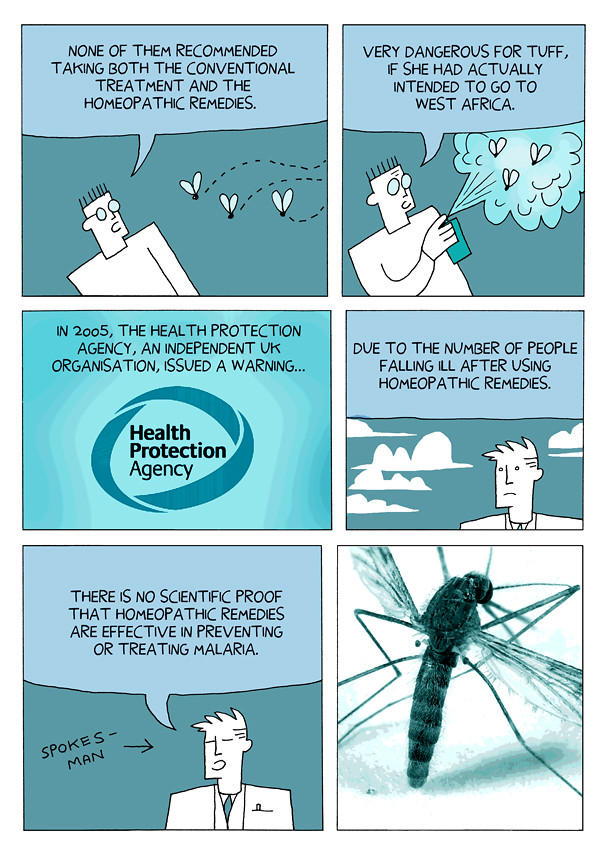
A 19 page strip about homeopathy. My follow up story-strip to the one I did on the MMR vaccine scare, and another chapter of my ongoing book about science. This is, in effect, the beta version of the strip. There will, I'm sure, be mistakes dotted throughout that I haven't spotted. So do feel free to point out any errors. The references will be in the next entry.

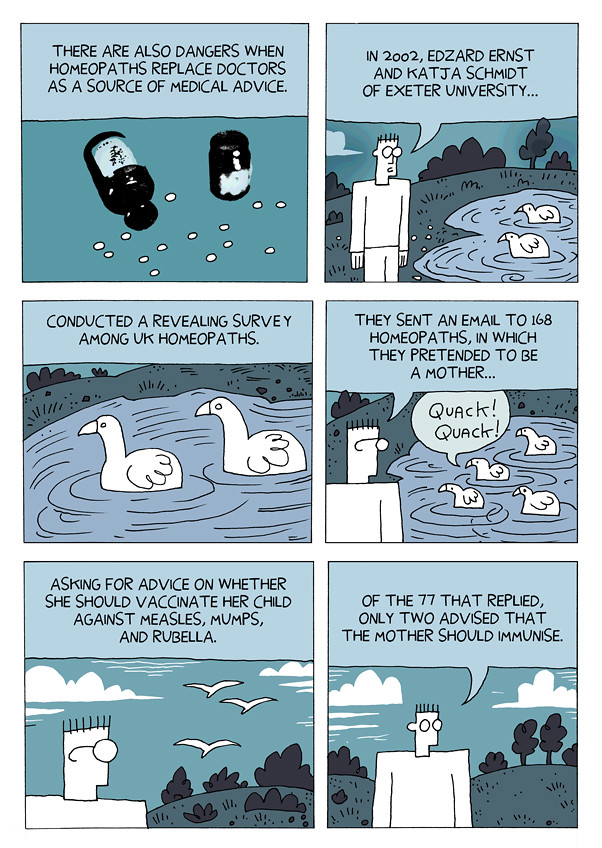
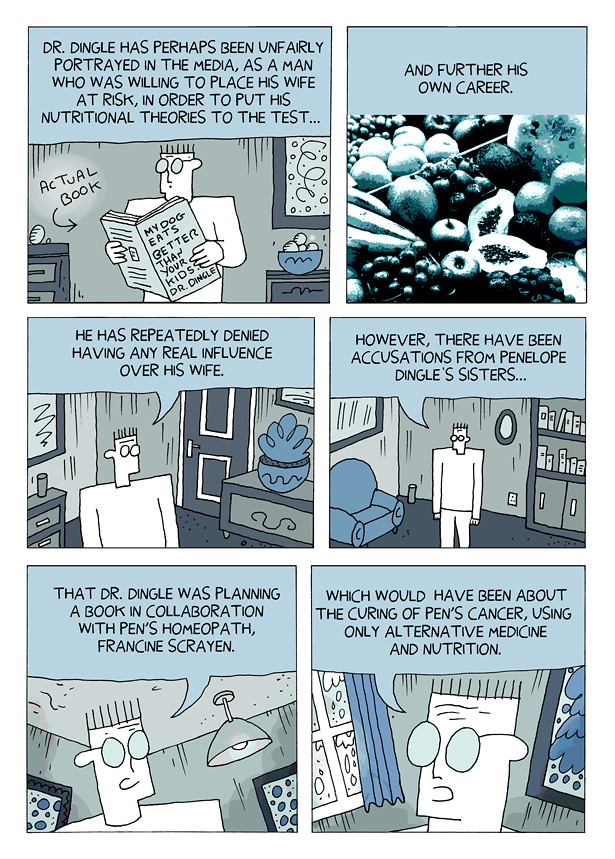
homeopathy 1

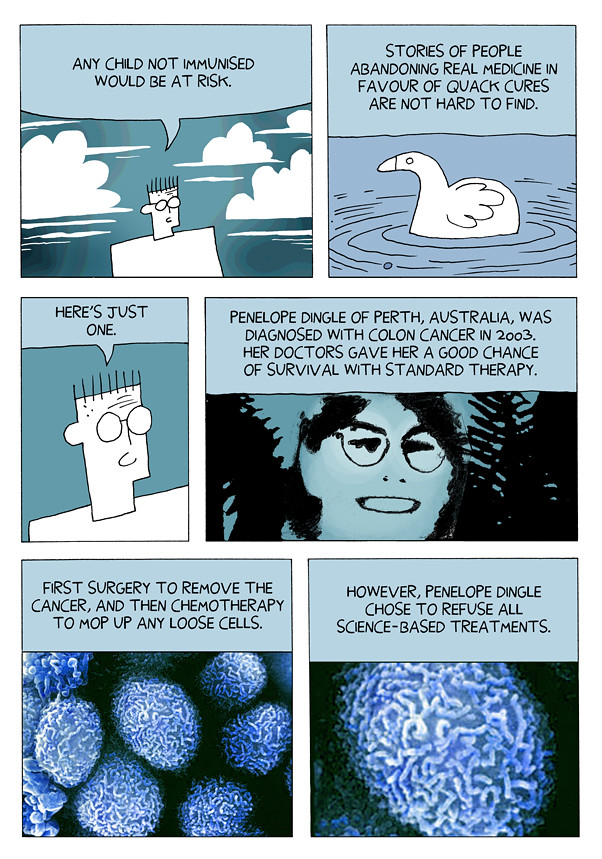
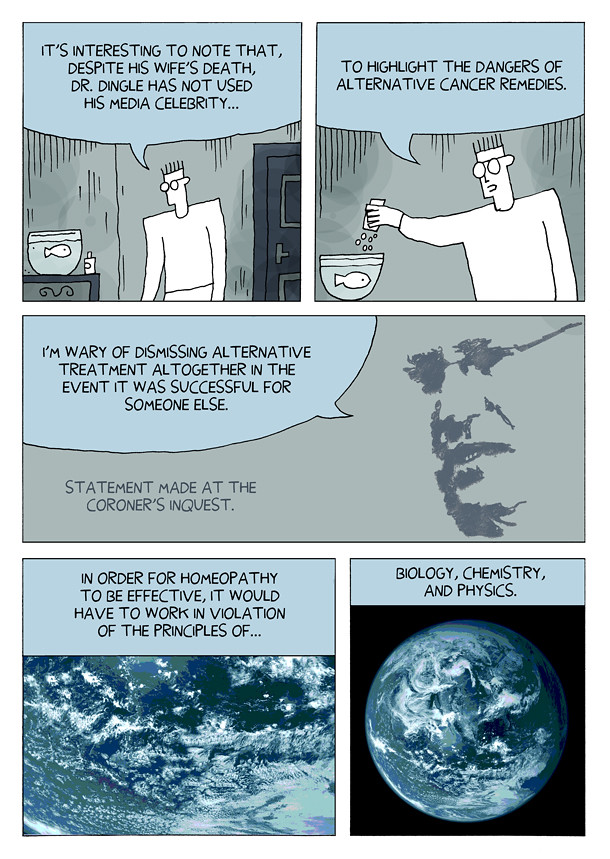
homeopathy 2

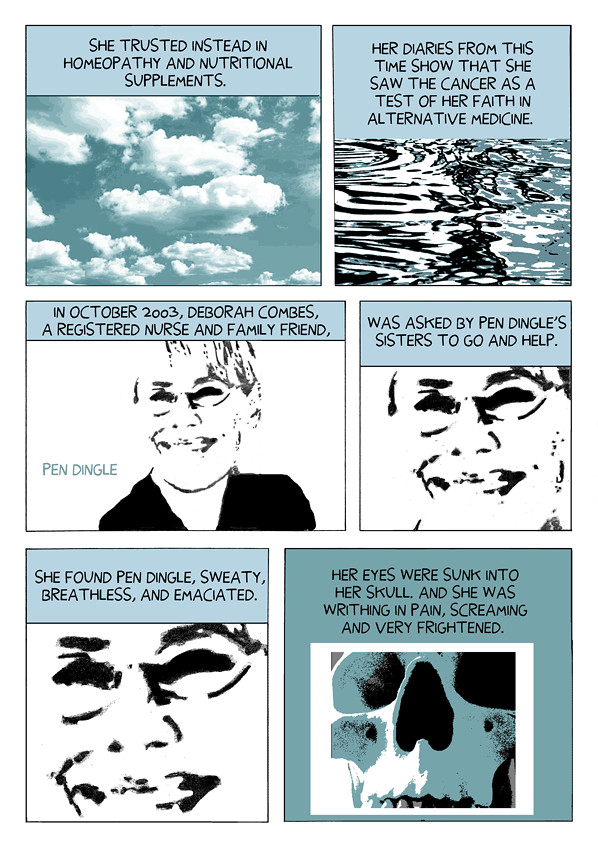
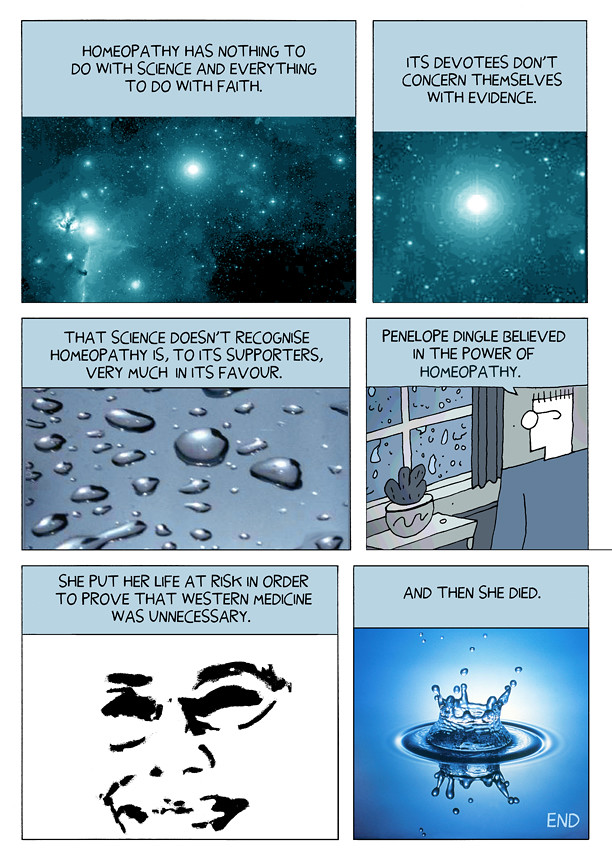
homeopathy 3

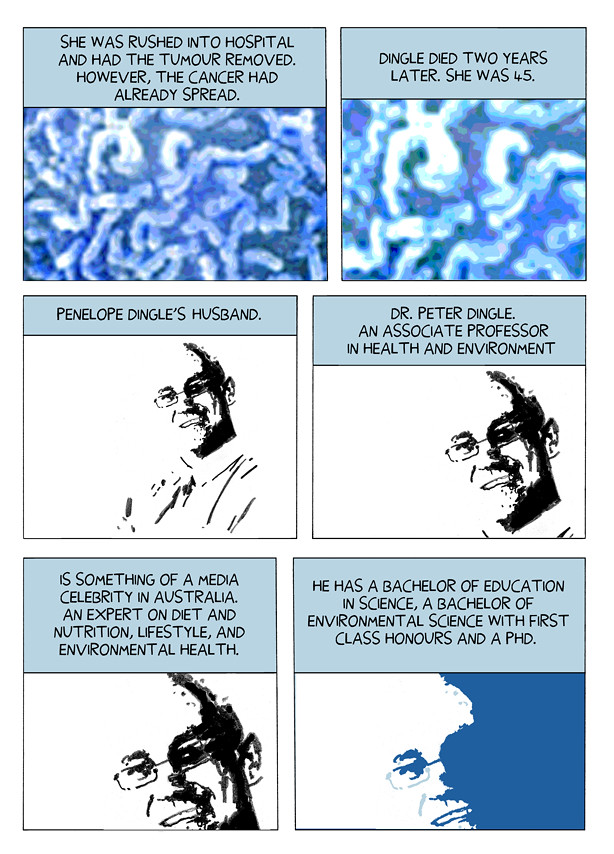
homeopathy 4

homeopathy 5

homeopathy 6

homeopathy 7

homeopath 8

homeopathy 9

homeopathy 10

homeopathy 11

homeopathy 12

homeopathy 13

homeopathy 14

homeopath 15

homeopath 16

homeopathy 17

homeopathy 18

homeopathy 19

Sunday, 20 June 2010

All About The Graphic Medicine Conference

Had a fabulous time in London, attending the Graphic Medicine Conference at the university of London. I'm still digesting the experience which was something of a whirl. I've not attended one of these academic events before, so for me it was something quite different. Nothing like the comics events I usually attend.

I have this stereotyped image in my mind of professors wearing tweed jackets while smoking pipes. The people there were nothing like this. I talked for a while with this young woman, who turned out to be a professor of European Intellectual history at an American university. I thought she was just some girl. Which doesn't say much for me.

The event was well attended. There were about seventy-five delegates there, from all over the world. Quite a lot of people from Canada. The main thrust of the conference was to explore the medical narrative in graphic novels and comics. Sounds a bit dry and surely there's only a tiny area to explore? Not so. In recent years there's been a small explosion of medical-themed graphic novels. A few of the creators of these books were at the event. Brian Fies, talking about his book Mom's Cancer: A Family's Experience In Comics. Also attending was Philippa Perry, author of Couch Fiction, a graphic novel about psychotherapy. And, of course, I was there with Psychiatric Tales.

There was also a focus on using illustrations and comics in the education of those working in medicine, as well as its usefulness in therapy for patients. I was particularly interested in one talk, by MK Czerwiec, in which she discussed using illustrations to break down the barriers between professional caregivers and their patients. It's still sometimes hard for doctors, nurses, etc, to properly see the point of view of their patients. This is partly due to the professional detachment such working people are obliged to have and the emotional defence necessary in these professions. Put on the white coat and you're immediately detached from the rest of humanity due to the higher status you've just achieved and the powerful stresses of the work. In MK Czerwiec's talk she discussed asking care-givers to draw both the experience of a particular illness from the point of view of the professional and the patient. The division in the content of these illustrations was very clear. The emotional and empathetic content was almost entirely lacking when the care-givers took the professional stance, but it remained a powerful element in the drawings when the group took the patient's role.

It was mostly very interesting, although I didn't get to see every presentation, due to the parallel programming that had to go on in order to fit everything into one day. From my point of view it was a great success. I sold every copy of Psychiatric Tales I had (and could have sold many more). I did well on the panel discussion with Brian Fies and Philippa Perry (chaired by Paul Gravett). The whole event was quite a blast and there was free wine at the end of the day. What could be better than that?

Thanks to Paul Gravett, Peter Stanbury, and Ian Williams.

Wednesday, 16 June 2010

Uncle Bob And The Vampire

A chapter from the Uncle Bob book which will be coming out from Blank Slate next
year.

bob vampire 1

bob vampire 2

bob vampire 3

bob new vampire 4

bob vampire new 5

bob vampire 6

bob vampire 7

bob vampire 8

bob vampire 9

bob vampire 10

bob vampire 11

Wednesday, 9 June 2010

Graphic Medicine

Things are going well here at Darryl HQ. I'm working a lot of nights this week, and so can't do much in the way of drawing. But when I do have the time, I'm working on two strips. A strip about homeopathy and an Uncle Bob strip for Uncle Bob Adventures (out from Blank Slate next year). The US edition of Psychiatric Tales in on course to be published from Bloomsbury in January (I've just given the OK for their redesign of the cover). Next week I'll be attending the Graphic Medicine Conference in London, speaking on a panel with Paul Gravett and Phillipa Perry. I'll be in London for three days.

Two frames from Uncle Bob And The Vampire.

two bob frames

Sunday, 23 May 2010

Uncle Bob (Two Versions Of The Same Page)

I'm currently redrawing an Uncle Bob strip, for the Blank Slate collection of Uncle Bob Adventures, which will be out next year.

Here's the first page of the redrawn strip, while below it you can see a page from the original version, drawn in 90s.

Compare and contrast.

Uncle Bob And The Vampire

Uncle Bob And The Vampire (Original Page)

Friday, 21 May 2010

Intro Page

A page from the introduction to the American edition of Psychiatric Tales, which will be out next year from Bloomsbury.

Psychiatric Tales USA Intro

Wednesday, 19 May 2010

MMR Vaccination References

References for the The Facts In The Case Of Dr. Andrew Wakefield, A Graphic Story By Darryl Cunningham. The main webpages I used to research this topic. I looked at many more, but the one's listed here were the most informative.

Ben Goldacre. The media’s MMR hoax.

The MMR-autism fraud. An investigation by Brian Deer.

David Gorski. The Fall of Andrew Wakefield.

Andrew Wakefield. From Wikipedia.

Profile: BBC on Dr Andrew Wakefield.

Brian Deer Dateline documentary.